It’s Not The Load, It’s The Way You Carry It

posture__health
“It’s not the load that breaks you down, it’s the way you carry it.” – Lena Horne

Our body is an architectural masterpiece – designed to do extraordinary things when functioning optimally. As a Structural Chiropractor, my focus is on the design of your spine. When the spine’s structure matches the blue prints from your DNA, then it is designed to handle the stresses of gravity and a healthy level of activity. However, when the spine loses its proper structure, then those stressors (gravity and activity) can suddenly reveal its weakness. In this post, we’ll focus on the cervical spine (your neck).

Structure Determines Function

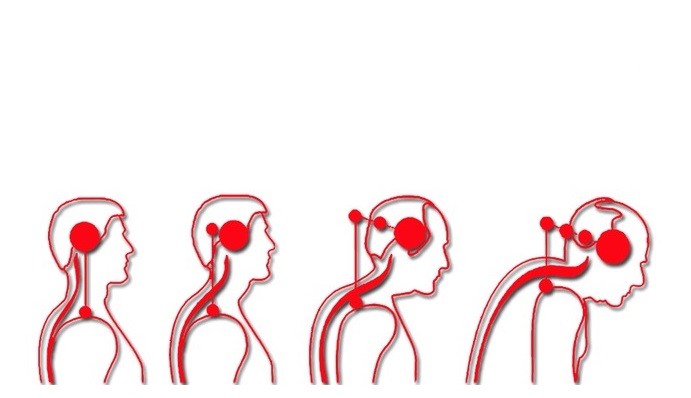
The presence of a curve in your neck allows for smoother motion of each of your neck vertebra. It also plays a key role in distributing force throughout the discs of the cervical spine. In essence, a C-shaped curve in the neck can and will prevent early breakdown and degeneration of your spinal joints. As the discs and joints begin to breakdown, it can create the environment for inflammation to build up around the nerves, or even lead to disc protrusions and disc bulges.

When the head shifts forward, it causes the shoulders and thoracic spine to round. When left there over time, the facet joints of the neck stop moving smoothly and lock the head in that forward position. This shifting of the spine can also advance the age of your spine through degeneration. However, when this head forward movement is corrected, the rest of the spine will often shift back into a normal position again and reduce the rounding on its own.

How Do We Correct This?

Postural corrective exercises can be performed to strengthen the upper back and neck. Massage therapy can be performed to address the muscular dysfunction and trigger points resulting from this shift. However, if the shifting of the spine is not addressed – then a correction will often not occur. In our office, we use specific adjustments to correct Structural Shifts allow your body to make Structural Corrections naturally and to the extent that is capable for you.
How Do You Know If Your Baby Needs an Adjustment?

How Do You Know If Your Baby Needs an Adjustment

DID YOU KNOW that structural shifts in the spine can happen from the birth process?

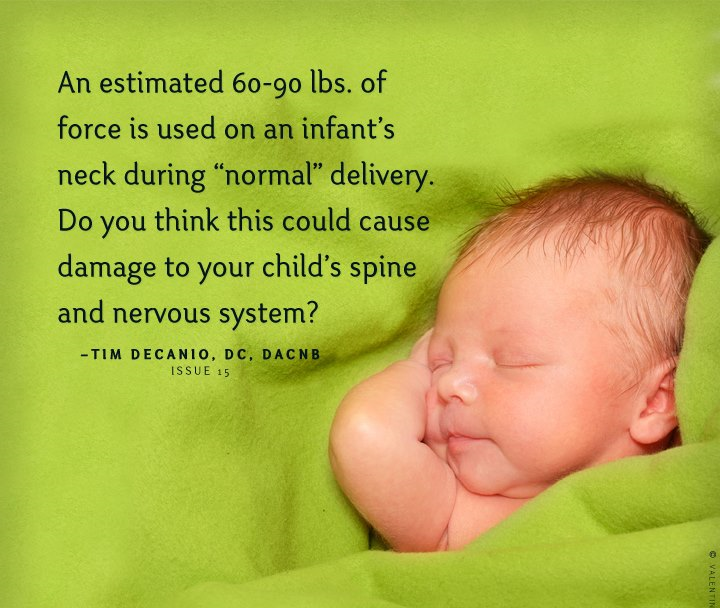
A typical birth can place 60-90 lbs of force onto an infant’s head and neck. While most children are okay, these shifts have been associated with colic, constipation, sleep issues and trouble feeding. Early check ups can help prevent structural shifts from becoming a chronic problem.

So why would a baby need an adjustment? It all starts with our modern birth process. You see, for thousands of years – the vast majority of children brought into this world were done so without the need for intervention and induction. That doesn’t mean that every birth was perfect and non-complicated – but it does mean that 40% or more of them did not end with drugs, anesthesia, and surgical tools. Unfortunately, in our present society – the birth process can often times be the first injury to a baby’s upper neck, cranial area, and spine. In my experience, the greater the amount of intervention during the birth process (induction, forceps, vacuum, C-section, etc.), the greater the likelihood of a significant shift in a newborn’s spinal structure.

When there is strain, tension, pulling and stress placed on the child’s head and neck during the birth process, it very commonly leads to a structural shift. This shift has three parts – misalignment, fixation (“stuck”), and nerve interference/irritation. This will often times lead to secondary conditions (colic, constipation, difficulty feeding) that we see resolve when these misalignments are corrected in infants.

The following are physiological signs of a structural shift in newborns, infants, and toddlers that parents can be on the lookout for:

Cervical spine (neck):
  • Baby always has head turned one way (head tilt)
  • Difficulty rotating head or restrictive neck motion in one or more directions
  • Apparent discomfort or resistance when touching muscles at base of skull (sub-occipitals).

Hips/Pelvis (sacrum):

  • Forward rotation of a hip when holding baby up under arms
  • One crease of buttocks higher than the other (deviated gluteal crease)
  • Arching of back
  • Unequal crawling

Skull (cranial bones):

  • Aysmmetry of cranial bones
  • Flattened occipital bone (back of head)
  • Uneven eye orbits

Pediatric Chiropractic care is gentle and safe. Only light force is needed when adjusting an infant or child’s spine. Imagine the pressure needed to press your pinky finger into a ripe red tomato. It’s important to note that not all chiropractors check and adjust children. I recommend using the ICPA’s website to find a pediatric chiropractor in your area that specializes in dealing with prenatal care, pregnancy, and children.