The Right Way to Fall

We’ve all done it – whether it happens on a crack in the pavement, going off a curb or missing a step – it’s usually accompanied by jumping up as quick as possible and acting like nothing happened (or is that part just me?!) The truth is – sometimes there’s no way to avoid a fall – so we may as well do it right (with the least amount of bodily harm).

Statistics tell us that more patients go to emergency rooms in the US after falling than from any other form of mishap, according to the Centers for Disease Control and Prevention (CDC), nearly triple the number injured by car accidents. Here in Connecticut, we have to also deal with ice and snow conditions that can contribute to falls. So to put it another way, you’re more likely to miss work this week because of taking a nose dive onto some pavement or ice than catching the flu.

How you prepare for the possibility of falling, what you do when falling, what you hit after falling – all determine whether and how severely you are hurt.

Now, some things we can’t control – but luckily – there are factors that are under our control when it comes to falling. For example, what condition you are in is key. Maintaining strength and flexibility plays a big role in how your body will respond. Lower body strength is important for recovering from slips, while upper body strength is crucial for surviving falls. Even what you eat is a factor – a study of 6,000 elderly French people in 2015 found a connection between poor nutrition, falling and being hurt in falls.

If you are falling, the key is to let it happen – when you feel yourself start to fall, let your body go limp. This will allow your body to naturally
roll into the fall. The less you rigid and tense you are the less likely you are to hurt yourself.

Ideally you want to protect your head – one way to do this is to try not to fall straight forward or backward (which raises the risk of damaging your spine and organs as well). The key is to roll, and try to let the fleshy side parts of your body absorb the impact – not a hip, knee or bone. Young people break their wrists because they shoot their hands out quickly when falling. Older people break their hips because they don’t get their hands out quickly enough (you’d much rather break a wrist than a hip).

The reality is that people fall – at least now you can be prepared for it.
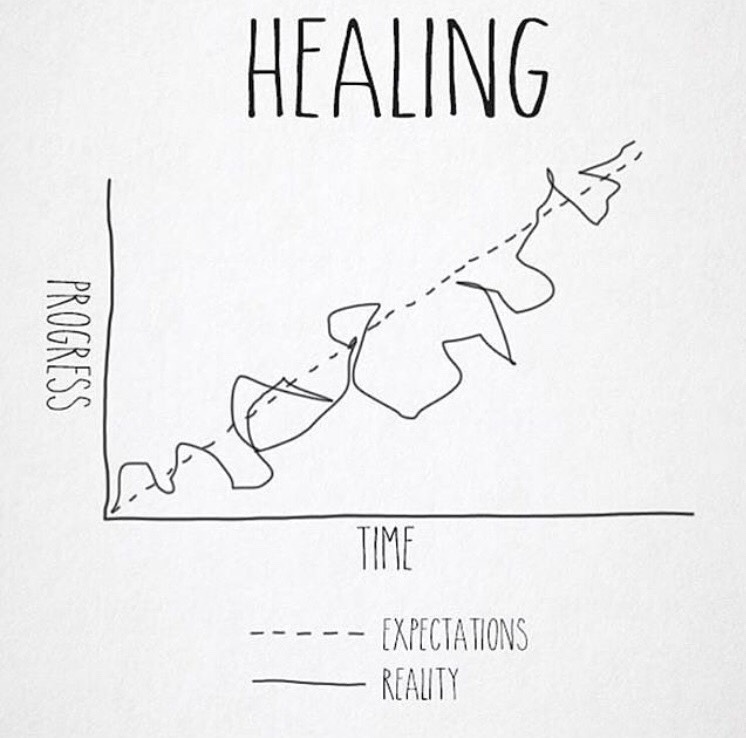
Healing Takes Time

With time comes progress, even if it doesn’t feel like it sometimes.

And the truth is, healing — change of any kind — isn’t linear. Whether it’s quitting smoking, starting an exercise routine, or leaving a toxic job or relationship, positive transitions are full of setbacks. Physical healing is no different.

Sometimes, a setback happens because of something external – as in something happens to re-aggravate an injury or condition. Often times patients will rush the healing process and do too much, too soon. But it’s also an inherent and important part of the healing process itself. We often see healing occur in alternating cycles of repair and recovery, and it’s common to see symptoms flare up during these cycles.

Occasional visits back to the old pattern are actually a normal and important part of healing that helps solidify the new, healthier pattern. Reversing structural abnormalities using specific customized chiropractic care gets to the underlying cause of many conditions – but it also takes time.

It’s also really important how you handle setbacks. 

Take this as a time to step back and focus on you. Often times when we begin to get better we forget about self care. Let’s remember that true health isn’t just by design – it’s also by choice. Caring for your adjustment is not just your chiropractor’s job. You, too, need to take responsibility and do what you can to maintain the adjustments you receive. Doing so will help expedite the spine’s retraining process, but it’s also just good practice for your body.

After all, a backbone and spinal cord that are in the proper position provide optimal performance for your entire body, enabling you to live a healthy, happy, pain-free and productive lifestyle.

Take note of what might have triggered the setback, so that you can understand and avoid what may aggravate your condition. In addition, sometimes when symptoms are milder and more intermittent, it’s easier to notice what provides some relief. Put that in your set of tools for the future, so you can continue learning how to recover more quickly and completely when you do have setbacks.

This is also a good time to keep the lines of communication open with your health care provider. Together, we might decide together to change your care or increase frequency for a while, to support your healing. Often a visit at the first sign of a flare-up can help stop you from going all the way down that path again.

Keep in mind, it’s only a matter of time before your body begins healing properly and true health and vitality can be achieved. Once the foundation has been fixed, then we’ll teach you how to keep it that way through customized recommendations designed for your spine, so the problem does not come back.